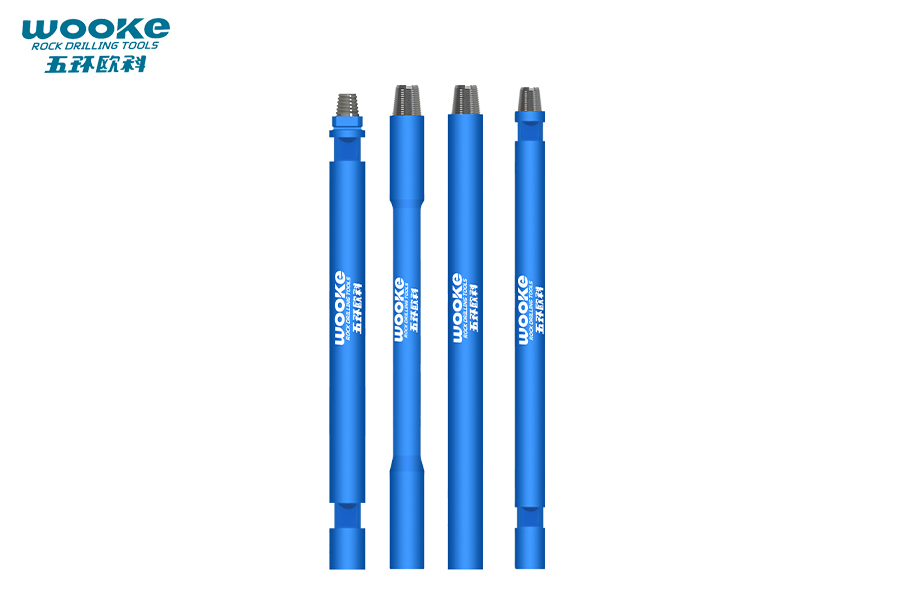
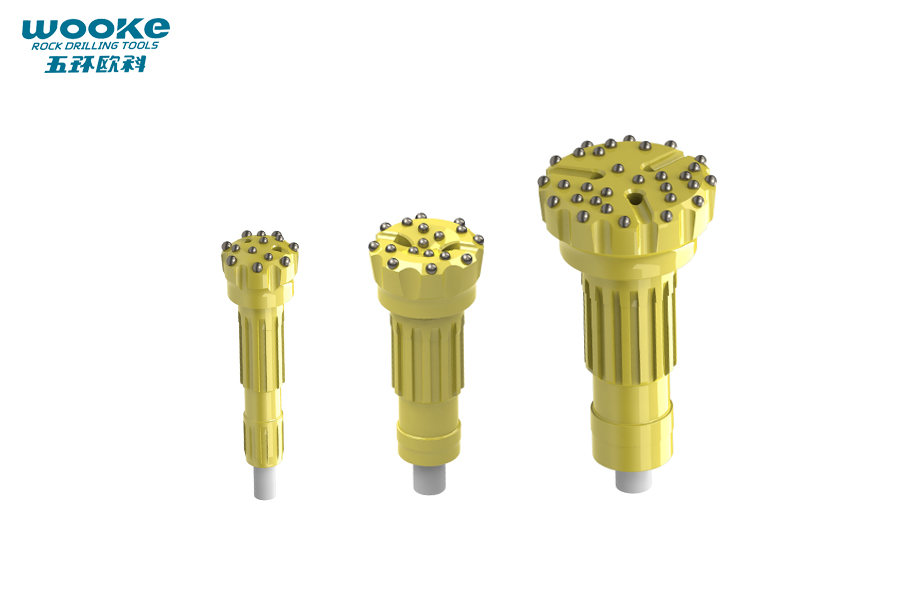
Welcome to Wooke Rock Drilling Tools Co., Ltd
Top Hammer Drilling vs. Down-the-Hole Drilling: Key Differences and Applications
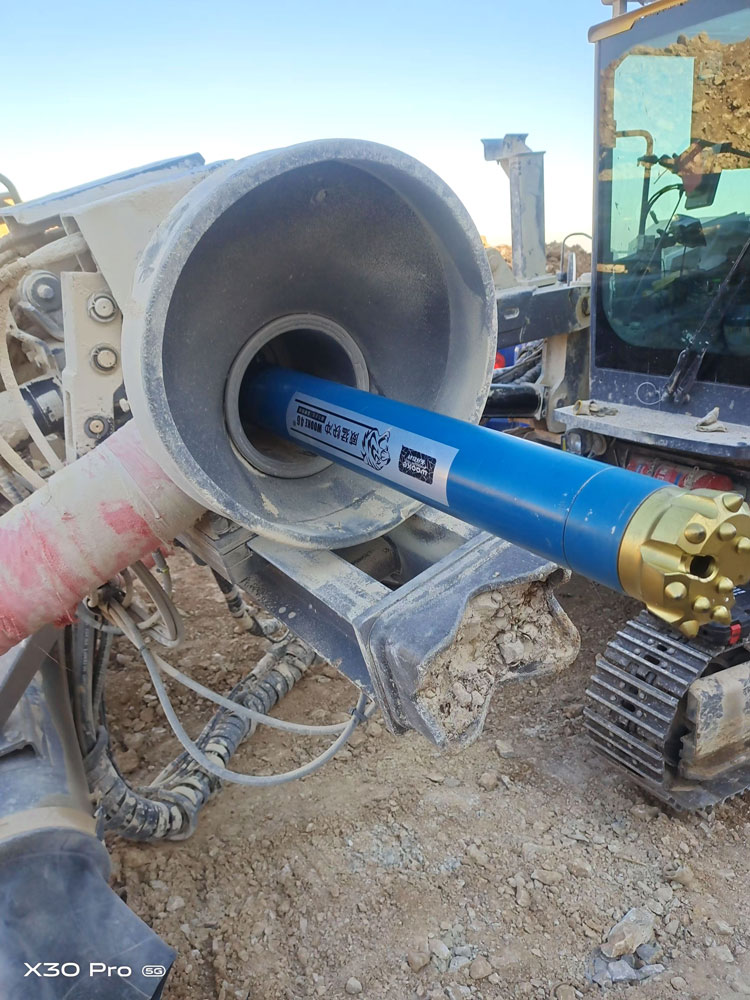
In the world of rock drilling and mining, choosing the right drilling method is essential to project success. Two widely used methods are Top Hammer Drilling (THD) and Down-the-Hole Drilling (DTH). Each method has its advantages, limitations, and ideal applications. Understanding the key differences between them can help operators and engineers make better decisions in terms of efficiency, cost, and performance.
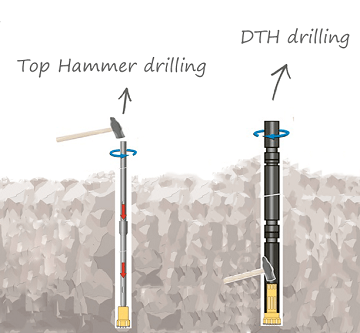
What is Top Hammer Drilling?
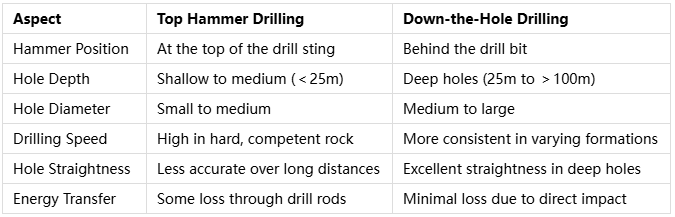
Top Hammer Drilling involves a hydraulic or pneumatic hammer located at the top of the drill string. The hammer generates high-frequency impact forces that are transmitted through the drill rods to the drill bit at the bottom. At the same time, rotary motion helps the bit crush and cut the rock.
Key Features:
Impact energy is transferred through the rods
Typically used for hole diameters up to 127 mm (5 inches)
Best suited for short to medium hole depths (up to 25 meters)
Faster penetration in hard rock
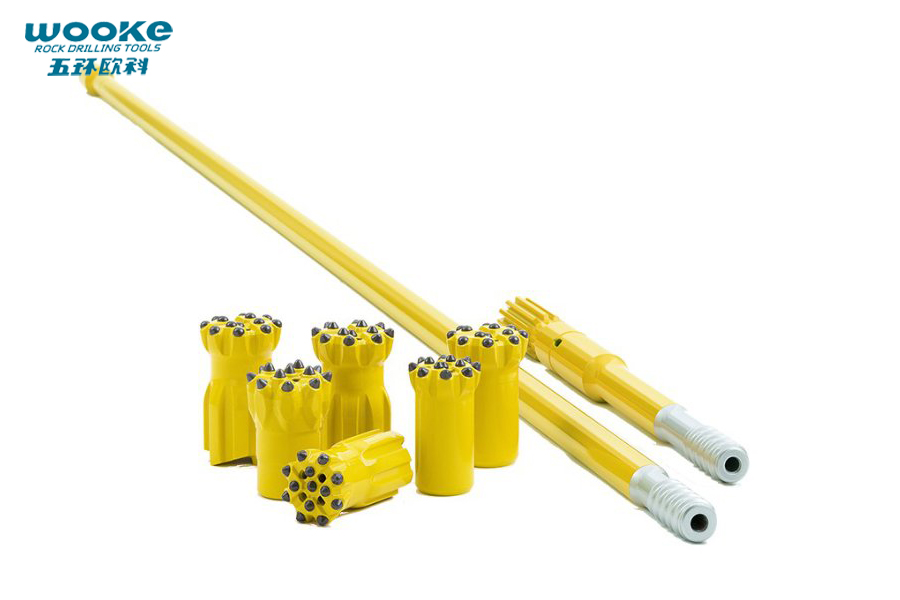
What is Down-the-Hole Drilling?
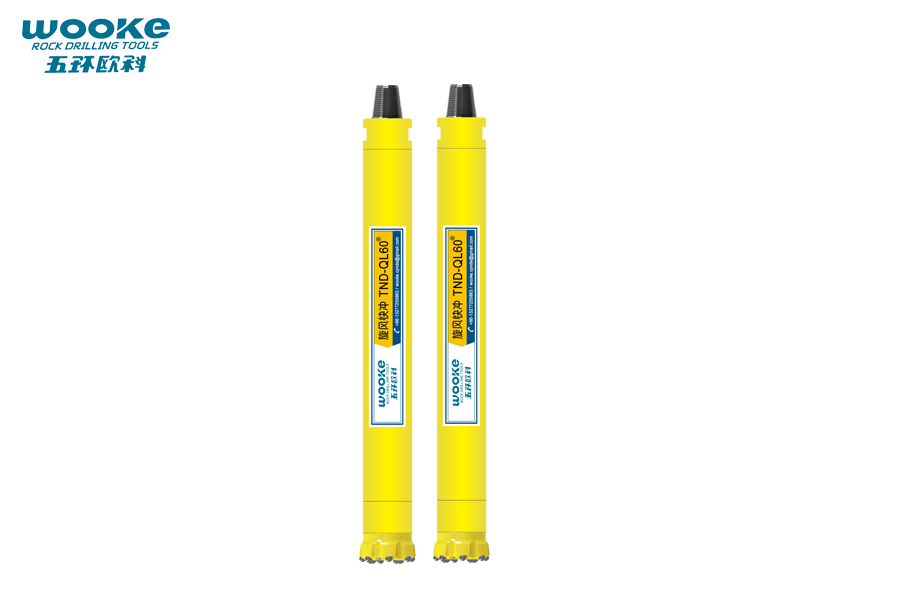
In DTH Drilling, the hammer is located directly behind the drill bit at the bottom of the hole. Compressed air powers the hammer, striking the bit directly, which reduces energy loss and allows for deeper and straighter holes.
Key Features:
Impact occurs at the hole bottom (less energy loss)
Suitable for larger hole diameters (90–254 mm or more)
Ideal for deep drilling (up to several hundred meters)
Performs well in hard rock and overburden
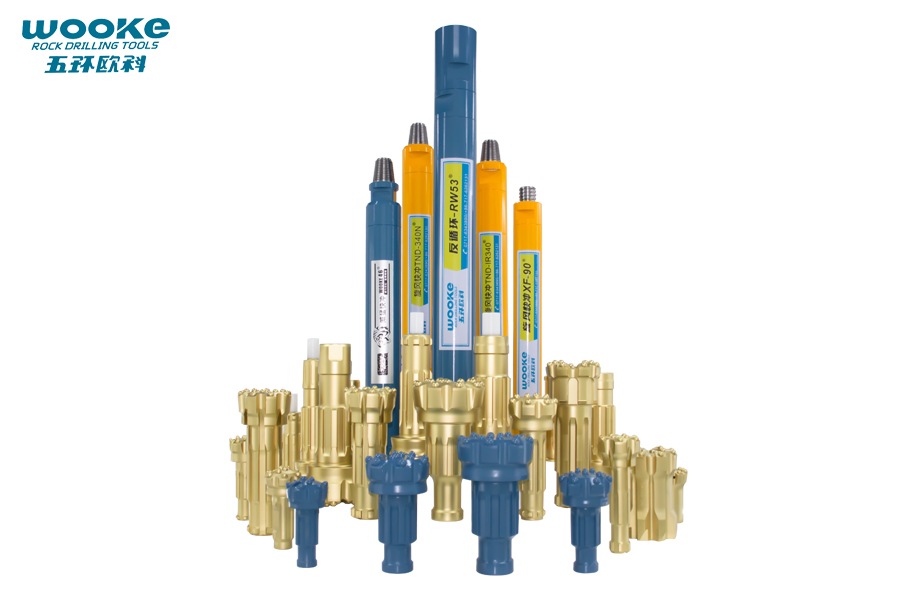
Key Differences at a Glance
Application Scenarios
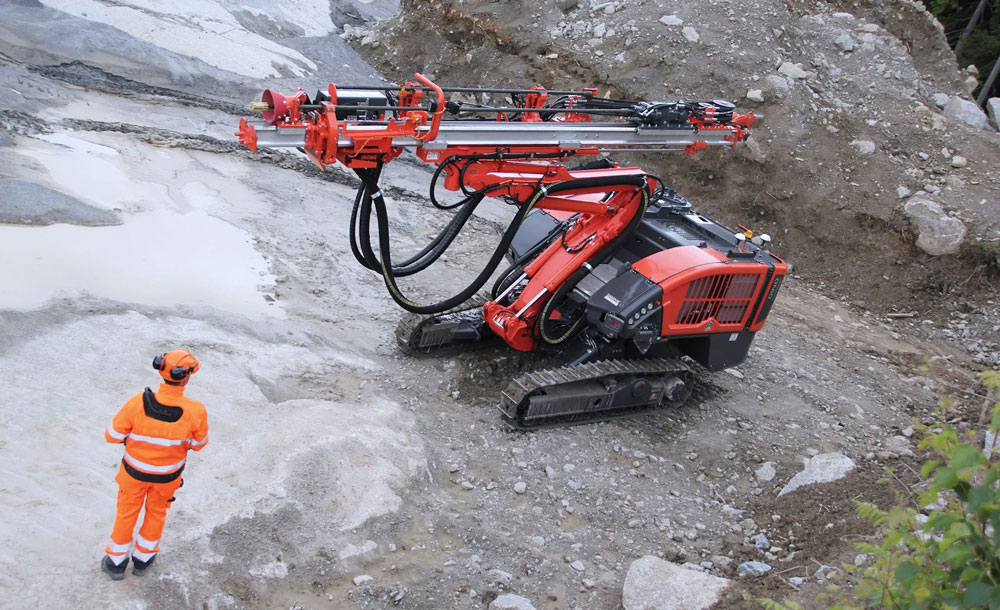
Top Hammer Drilling is commonly used in:
Bench drilling in quarries
Tunneling and underground mining
Construction sites with shallow rock formations
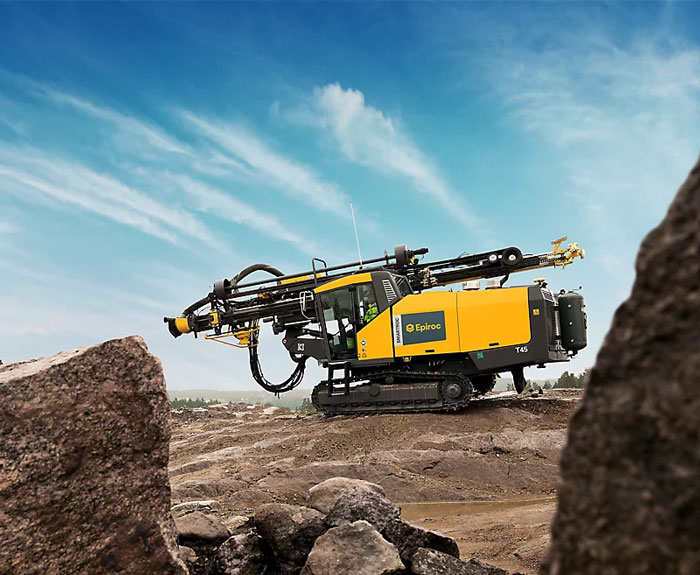
Down-the-Hole Drilling is preferred for:
Blast hole drilling in open-pit mines
Water well drilling
Geothermal and exploration drilling
Foundation and piling work in civil engineering
Conclusion
Both Top Hammer and Down-the-Hole Drilling offer valuable benefits, depending on the geological conditions and project requirements. Top Hammer is ideal for fast, shallow drilling in hard rock, while DTH is more effective for deep, straight holes in mixed or soft formations.
By evaluating your specific project needs—depth, rock type, accuracy, and cost—you can select the most efficient method and maximize drilling performance.